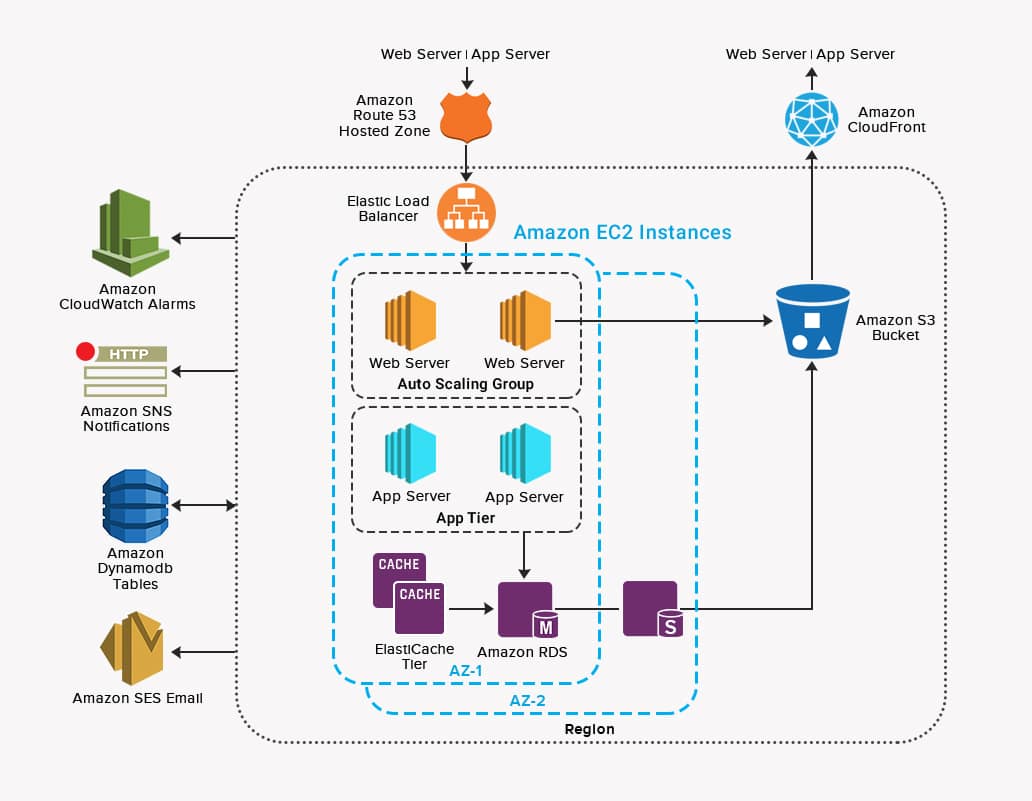
Cloud services architecture and solutions
Cloud services architecture and solutions involve designing and implementing systems that leverage cloud computing to deliver scalable, flexible, and cost-effective IT resources. Here are key components and considerations:
Key Components of Cloud Architecture
- Cloud Service Models:
- IaaS (Infrastructure as a Service): Provides virtualized computing resources over the internet (e.g., AWS EC2, Google Cloud Compute).
- PaaS (Platform as a Service): Offers a platform allowing customers to develop, run, and manage applications without dealing with infrastructure (e.g., Google App Engine, Heroku).
- SaaS (Software as a Service): Delivers software applications over the internet on a subscription basis (e.g., Microsoft 365, Salesforce).
- Deployment Models:
- Public Cloud: Services offered over the public internet (e.g., AWS, Azure).
- Private Cloud: Dedicated resources for a single organization, either on-premises or hosted by a third-party.
- Hybrid Cloud: A combination of public and private clouds, allowing data and applications to be shared between them.
- Architecture Design Principles:
- Scalability: Systems should easily scale up or down based on demand.
- Reliability: High availability and fault tolerance to ensure continuous service.
- Performance: Optimize response times and resource usage.
- Security: Implement robust security measures, including encryption and access controls.
- Microservices and Containers:
- Microservices Architecture: Decomposing applications into smaller, independent services that can be developed and deployed separately.
- Containers: Using technologies like Docker and Kubernetes for deploying and managing microservices.
- Data Management:
- Databases: Choosing between SQL and NoSQL databases based on application requirements.
- Data Lakes and Warehouses: For storing and analyzing large volumes of data.
Cloud Solutions
- DevOps and CI/CD: Implementing continuous integration and continuous deployment pipelines for faster software delivery.
- Serverless Computing: Utilizing serverless architectures (e.g., AWS Lambda) to run code without provisioning servers.
- Disaster Recovery and Backup: Solutions for data backup and recovery, ensuring business continuity.
- API Management: Designing and managing APIs to facilitate communication between different services and applications.
- Monitoring and Analytics: Using tools for monitoring cloud resources and analyzing performance metrics.
Considerations for Implementation
- Cost Management: Understanding pricing models and optimizing resource usage to manage costs effectively.
- Compliance and Governance: Ensuring adherence to regulatory requirements relevant to data and applications in the cloud.
- Vendor Lock-in: Being mindful of potential lock-in with specific cloud providers and exploring multi-cloud strategies